pelvic-health · training · beginners · 5 min read · Updated 2026-08-13
How to Use Kegel Weights: Step-by-Step Beginner's Guide (Australia)
The short answer
Wash your hands and the weight, add a drop of water-based lubricant, insert it like a tampon — angled toward the small of your back — then retain it with a gentle contraction for 10–15 minutes of light activity. Start with the lightest weight in your set (27 g in ours) and progress only when a full session feels easy. Physiotherapy research shows measurable change at 6–12 weeks of consistent training, not days. Skip weights entirely — and see a pelvic health physiotherapist instead — if you have pain, prolapse symptoms, are pregnant, or are recovering from birth or surgery.
This guide is general information, not medical advice. Pelvic health is individual — when in doubt, a pelvic health physiotherapist can assess what is actually going on, which no article or product can.
Transparency first: Velaine stocks the trainer set recommended below. How we choose and describe products is set out in our editorial standards.
How to use kegel weights: the six steps
- Wash your hands and the weight. Warm water and mild soap on both, or a no-rinse foaming cleaner on the weight. Pat dry — a nearly dry weight is easier to handle than a wet one.
- Apply one drop of water-based lubricant to the rounded end. Water-based, not silicone, is the safe default on a silicone weight. One drop is enough; more just makes retention harder.
- Insert it like a tampon. Rounded end first, angled toward the small of your back rather than straight up — the vaginal canal tilts backwards. Stop when only the retrieval cord remains outside the body.
- Contract gently to retain it. A light squeeze-and-lift of the pelvic floor — the same muscles you would use to stop the flow of urine — closes around the weight and holds it. It should feel held, not clenched; hard clenching defeats the training.
- Stay lightly active for 10–15 minutes. Walk around the house, hang the washing, unpack the dishwasher. Being upright and moving is the workout — lying on the couch asks almost nothing of the muscles.
- Wash up, and progress only when it's easy. Relax, remove the weight with the cord, wash and air-dry it. Move to the next weight only when the current one stays put for a full session — including walking, coughing and stairs. That usually takes weeks, not sessions, and that is normal.
Do this a few days per week. Daily is fine, but consistency across weeks matters far more than intensity in any single session.
How to insert kegel weights
Step three is where most beginners stall, so here it is in more detail. Any of these positions works — choose whichever feels least awkward:
- Lying down, knees bent. The easiest starting position: gravity is out of the equation and the pelvic floor relaxes more readily. Recommended for your first few sessions.
- One foot raised on the toilet lid or the edge of the bath — the familiar tampon position, and the most practical once you know what you're doing.
- Standing. Quickest once practised, and you can start the retention timer immediately.
A few comfort notes. Exhale and let the muscles relax as you insert — pushing against a tense pelvic floor is uncomfortable and unnecessary. Correctly placed, the weight sits low in the vagina, like a tampon; once you're up and moving you shouldn't be aware of it distinctly, though feeling it shift slightly is normal (that shifting is the feedback doing its job). If it feels like it's about to slip out, nudge it a little deeper. More lubricant is always an acceptable fix. And insertion should never hurt — pain is a stop sign, not a technique problem (see the red flags below).
What the weights actually do
A kegel weight sits where the pelvic floor muscles must engage to retain it. That does two useful things: it gives you unmistakable feedback that you are using the right muscles (the most common failure mode of unweighted exercises is squeezing everything except the pelvic floor), and it adds progressive resistance the same way dumbbells do for any other muscle group. Pelvic floor training itself has a solid evidence base — it is first-line, guideline-recommended care for stress incontinence and routinely prescribed by physiotherapists after childbirth. Weights are simply a tool that makes the training more concrete.
A realistic timeline
Expect nothing measurable in the first fortnight — that is normal and does not mean it isn't working. Published trials generally show meaningful change at 6–12 weeks, with gains continuing towards six months. Put the routine somewhere automatic (after your morning shower is popular) and judge it at week eight, not week one.
When not to train — read this part
Weighted training is the wrong starting point, and a physiotherapist the right one, if any of these apply:
- Pain — during training, or pelvic pain generally
- Diagnosed or suspected prolapse, or a feeling of heaviness or dragging
- Pregnancy, or the first weeks after birth
- Recent pelvic or abdominal surgery
- Active infection
One less obvious warning: not all pelvic floor problems are weakness. An overly tight (hypertonic) pelvic floor produces urgency and pain, and strengthening exercises actively worsen it. If training makes symptoms worse rather than gradually better, that is diagnostic information — stop and get assessed.
In Australia you can book a pelvic health physiotherapist directly, without a referral. If symptoms are ongoing, though, start with your GP: under a Medicare chronic disease management (care) plan, part of the cost of some physiotherapy sessions may be rebated — worth asking about before paying entirely out of pocket.
Choosing a set
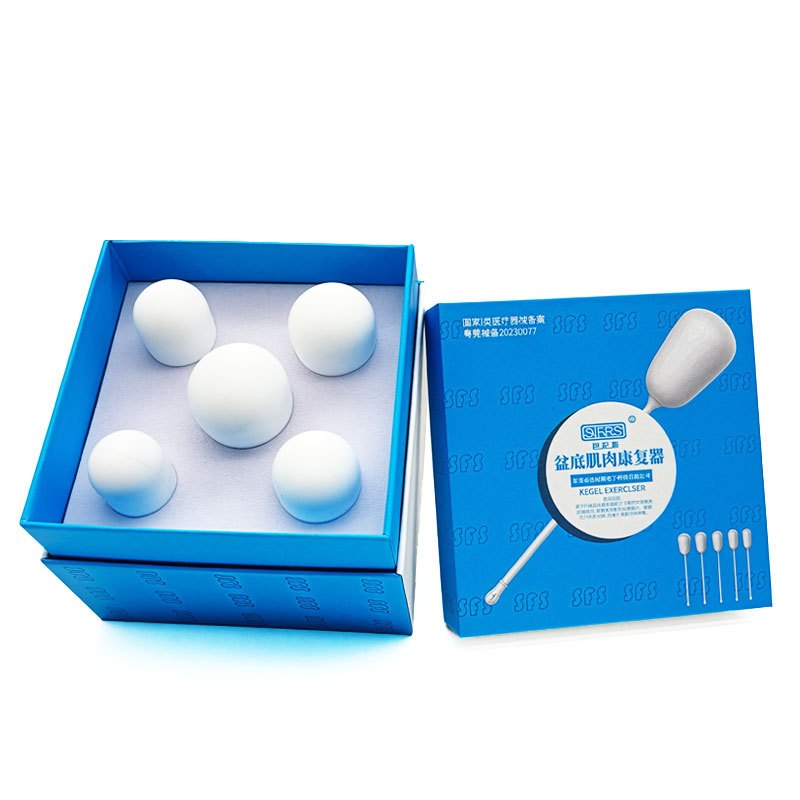
The requirements are short: a seamless silicone surface (porous coatings are not acceptable for internal use), a retrieval cord, and at least three graduated weights so progression doesn't require a second purchase. That is the specification our Bloom trainer set (A$59) was chosen to meet: medical-grade silicone over an ABS core with a sealed join, a flexible retrieval cord, and five graduated weights from 27 g to 70 g, so the whole progression path is in one box — along with a short training guide.
Further reading
The Continence Foundation of Australia is the national peak body for continence and pelvic floor health. Its clinician-reviewed resources are independent of any retailer and a good complement to this guide. If you're weighing up weights against app-connected trainers, we compare the two approaches in kegel weights vs app trainers.