Kegel Weights in Australia: Body-Safe Pelvic Floor Training, One Step at a Time
Kegel weights are small weighted trainers that your pelvic floor muscles hold in place, turning a passive squeeze-and-release exercise into resistance training. Instead of guessing whether you are contracting the right muscles, the weight gives you immediate feedback: if it stays put while you stand and move, your pelvic floor is doing the work. Used for short, regular sessions, they are one of the simplest ways to make pelvic floor training measurable.
They suit a wide range of people: anyone starting pelvic floor strengthening for the first time, people rebuilding strength after childbirth (once cleared by their doctor or pelvic health physiotherapist), and those who notice their pelvic floor tiring easily during exercise or everyday activity. They are a training tool, not a treatment — if you have pain, a diagnosed prolapse, or symptoms that worry you, see a pelvic health physiotherapist before you start.
A note on how we work: Velaine is an Australian store, and we stock everything we recommend — including the Bloom kegel trainer set featured on this page, which is made from medical-grade silicone over an ABS core with a sealed join and a flexible retrieval cord. We only make claims we can source, and where a figure comes from a manufacturer rather than our own testing, we say so. You can read exactly how we handle recommendations on our editorial standards page.
The set we stock
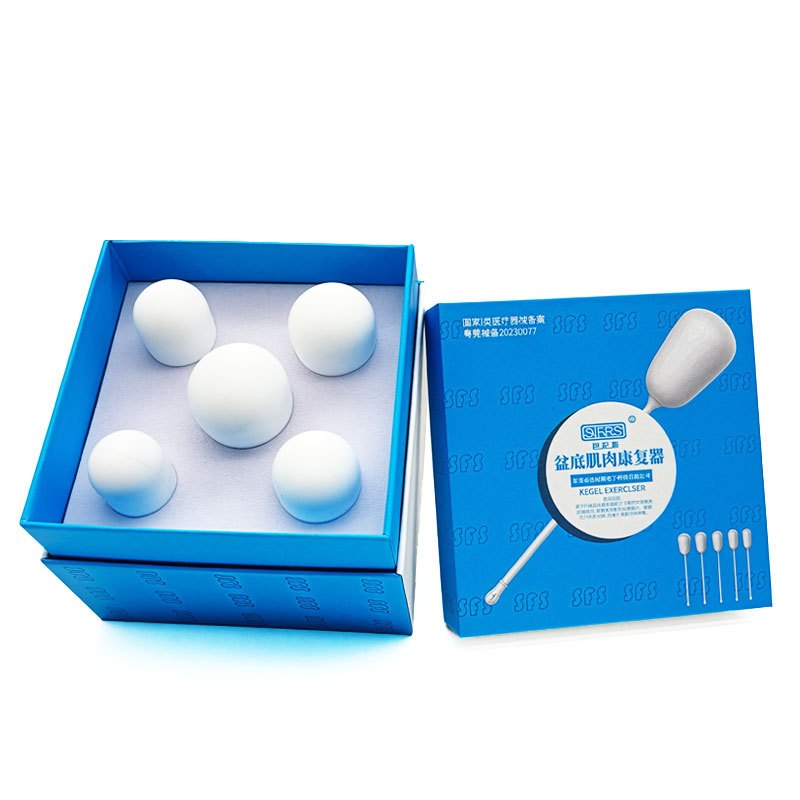
Which weight to start with — and when to move up
| Weight | Who it suits | When to progress |
|---|---|---|
| 27 g | Complete beginners, anyone returning to training after a long break, and anyone unsure of their current pelvic floor strength | Move up once you can hold it in place comfortably while standing and walking for a full session, without consciously gripping |
| 35 g | Those who found 27 g easy from day one, or beginners graduating from the lightest weight | Progress when a session at this weight feels routine — no slipping, no clenching of thighs or glutes to compensate |
| 45 g | Intermediate users with a few weeks of consistent training behind them | Progress when you can complete sessions during light activity — housework, a short walk — with the weight staying secure |
| 55 g | Experienced users building towards the top of the set | Progress only when holds feel genuinely effortless; there is no prize for rushing to the heaviest weight |
| 70 g | Advanced users, and anyone maintaining strength they have already built | The heaviest weight in the set — most people use it for one or two maintenance sessions a week rather than daily training |
Why progressive weights matter
Pelvic floor muscles respond to load the same way any other muscle does: they adapt to what you ask of them, then plateau unless the demand increases. That is why the Bloom set spans five weights from 27 g to 70 g rather than offering a single trainer. Starting light lets you learn correct technique — a proper lift-and-hold, not a clench of the thighs or glutes — and moving up gradually keeps the muscles adapting without strain. Jumping straight to a heavy weight usually teaches compensation rather than strength, and a weight that slips constantly is discouraging for no good reason. Small steps, taken consistently, are the whole method; the included training guide walks you through the same progression.
Frequently asked questions
Are kegel weights safe to use?+
For most healthy adults, yes — short sessions with a body-safe weight are a well-established way to train the pelvic floor. They are not suitable for everyone, though: if you are pregnant, recently postpartum without medical clearance, recovering from pelvic surgery, or have pain or a diagnosed prolapse, talk to your GP or a pelvic health physiotherapist first. This page is general information, not medical advice.
Which weight should I start with?+
Start with the lightest weight in the set — 27 g in the Bloom kegel trainer set — even if you suspect your pelvic floor is already reasonably strong. The first sessions are about learning correct technique, and a light weight makes it obvious whether you are lifting with the pelvic floor or compensating with other muscles. Moving up a weight later takes seconds; unlearning bad technique takes much longer.
How long until I notice results?+
Be sceptical of anything promising results in days. Like any strength training, pelvic floor work depends on consistency: most structured programs are built around weeks to a few months of short, regular sessions rather than a quick fix. A practical marker of progress is when your current weight starts feeling easy to hold during normal movement — that is your cue to step up.
Do you ship kegel weights discreetly within Australia?+
Yes. Every order leaves our Australian warehouse in plain packaging with a neutral sender name, and the charge on your card statement is neutral too. Delivery takes 2-5 business days anywhere in Australia; shipping is free on orders over A$79 and A$9.95 otherwise. Full details are on our shipping and returns page.
Is the silicone in the Bloom set body-safe?+
The Bloom trainers are medical-grade silicone over an ABS core, with a sealed join and a flexible silicone retrieval cord. Medical-grade silicone is non-porous, which makes it straightforward to keep clean with warm water and mild soap or a dedicated toy cleaner. Our body-safe materials guide covers what makes a material body-safe in detail.
Where to go from here
If you are new to all of this, start with our step-by-step guide to using kegel weights — it covers technique, session length and the mistakes that stall most people in the first fortnight. And if you are weighing up weighted trainers against app-connected devices, our kegel weights vs app trainers comparison lays out honestly where each approach wins.